A Winter Maintenance Guide for Exterior Plant care on Commercial Properties
For modern commercial estates and corporate headquarters, exterior landscaping impacts tenant satisfaction, customer perceptions and brand value. When winter hits, severe frost, wind desiccation and soil degradation can damage these green investments, leading to high replacement costs come spring.
By taking a proactive, preventative approach to winter grounds maintenance, facilities teams can safeguard estate value, ensure site safety and maintain visual impact year-round. This article guides you through the actions to take:
- Quick reference list of winter threats and actions for exterior plant care.
- Protect plants in containers from freezing.
- Protect plants from de-icing salt.
- Protect plants from harsh urban microclimates and wind shear.
- Watering, pruning and potting medium health.
- Preventing slip, trip and fall hazards.
- A checklist for pre- to post-winter plant care.
Quick reference list of winter threats and actions for exterior plant care
The table below outlines the primary threats to exterior plants, their potential commercial impact and the preventative actions required.
| Threat | Impact on commercial sites | Recommended preventative action |
|---|---|---|
| Gritting salt runoff | Root scorch, severe soil compaction, and high plant mortality rates, particularly along high-traffic pedestrian paths and car park perimeters. | Install physical turf and planter barriers before the first frost; establish a one-metre "no salt" buffer zone for gritting teams; flush soil proactively during mild, wet spells. |
| Container freezing | Rapid root-ball death due to exposed pot walls; structural cracking and failure of expensive fibreglass, terracotta, or stone architectural planters. | Insulate inside containers during the initial planting phase; group mobile planters against sheltered, heat-retaining building walls; elevate pots on risers to prevent freezing to paving. |
| Wind shear and desiccation | Dehydration and "windburn" in high-value evergreen entrance displays, leading to unsightly brown foliage that ruins corporate kerb appeal. | Apply professional anti-desiccant coatings to vulnerable evergreens; install temporary architectural windbreaks or reposition mobile displays out of urban wind tunnels. |
| Snow and gale debris | Snapped limbs damaging property or vehicles; blocked access routes; wet leaf and branch debris leaving critical pedestrian slip hazards and liability risks. | Conduct pre-winter structural crown thinning on mature perimeter trees; implement a dedicated rapid-response debris clearance protocol after severe weather events. |
| Waterlogging and freezing | Root asphyxiation (causing rot) followed by mechanical root ice-shearing as trapped water freezes and expands within confined planter spaces. | Clear planter drainage holes of autumn debris; fully decommission, drain and blow out automated irrigation lines before temperatures drop below freezing. |
Protect plants in containers from freezing
Planters exposed to severe cold require targeted insulation and drainage management to prevent root-ball freezing and pot damage.
Why containers freeze first
Containers have small volumes and are raised in the air, which exposes the plants to:
- 360-degree cold penetration: Cold air circulates the exposed base and sidewalls, freezing the roots through the container walls.
- Premature feeder root mortality: The fine, moisture-absorbing feeder roots running along the inner walls of a planter can succumb to freezing even at temperatures as mild as -5°C.
- Desiccation: Once the root ball freezes solid, the plant can no longer draw up moisture. Then, when drying winter winds evaporate water from evergreen foliage, the plant suffers rapid, irreversible dehydration, which is often mistaken for frost burn.
Use insulation materials for protection
Three types of insulation can be added to container plants. When adding insulation materials, remember to maintain the aesthetics of the display:
- Use internal liners: Install bubble wrap or insulating liners inside planters before adding potting medium. This creates an insulation layer without affecting the pot's exterior appearance.
- Temporary architectural fleecing: During extended periods of sub-zero temperatures or after warnings of severe frost, wrap commercial-grade 30–50 gsm horticultural fleece over sensitive plants such as bay laurels, olive trees or palms. Secure the fleece neatly at the base of the trunk with heavy-duty black ties or drawstrings, avoiding untidy overhangs.
- Surface insulation: Apply a uniform 50mm top dressing of premium graded bark mulch across the top of the container. This provides a soil-protection layer, minimises moisture loss through evaporation, and keeps the display visually sharp and weed-free.
Pot drainage and freezing
Water expands by roughly 9% when it freezes, causing root rot and structural damage to planters. To preserve the structural integrity of containers and root health:
- Clear drainage holes: Inspect the container drainage holes before the first hard frost. Silt, compacted compost and autumn leaves frequently clog outlets, allowing water to collect and then freeze into a block of ice inside the container.
- Eliminate saucers and catch trays: Exterior commercial containers should never sit in collection trays during winter. Stagnant rainwater will freeze solid, blocking the base drainage holes and creating a block of ice inside the base of the pot.
- Install heavy-duty pot risers: Elevate all planters by at least 15mm using discreet rubber or composite pot feet. This serves two critical functions:
- It ensures water drains out of the container rather than freezing and blocking the drainage holes.
- It prevents the base of the planter from freezing directly to the wet paving, which frequently causes the bottom of stone, terracotta, or GRP (glass-reinforced plastic) pots to shear off when moved or thawed.
Protect plants from de-icing salt
Winter de-icing is essential for the safety of roads and pathways, but salt runoff combined with urban microclimates can cause severe stress to plants.
Salt and de-icing chemical runoff
De-icing salt (sodium chloride) is a major cause of winter landscape damage along footpaths, roadways and car park borders.
- Physiological drought and chemical scorch: High soil salt concentrations draw water from plant roots, inducing physiological drought even when the soil is saturated. Once absorbed, excess sodium and chloride ions travel to foliage margins, causing irreversible root necrosis, marginal leaf scorch and branch dieback.
- Soil breakdown: Repeated saturation with salt breaks down soil structure, which reduces porosity, depletes oxygen and causes long-term compaction that prevents root regeneration in the spring.
Operational mitigation protocols
- Establish a one-metre gritting buffer zone: Mandate in sub-contractor Service Level Agreements (SLAs) or internal gritting SOPs that mechanical spreaders and manual gritting crews maintain a minimum one-metre buffer zone from all soft landscaping, tree pits and low-level planters.
- Deploy salt deflectors: In gritting areas, such as loading bays, perimeter roadways and car parks, place temporary screens (e.g. boards, minimum 300mm high) along bed perimeters to intercept grit scatter and plough spray.
- Specify use of non-corrosive de-icers near plantings: Replace salt with non-toxic de-icers such as calcium magnesium acetate (CMA) or liquid potassium acetate around primary entrances and ornamental planters. CMA is biodegradable, non-corrosive to stone paving and architectural metalwork, and significantly less toxic to roots.
- Flush contaminated soil with water: If a planting bed or container is contaminated, flush the root zone thoroughly with clean water on the next frost-free morning to dilute and leach out soluble salts before the ground freezes.
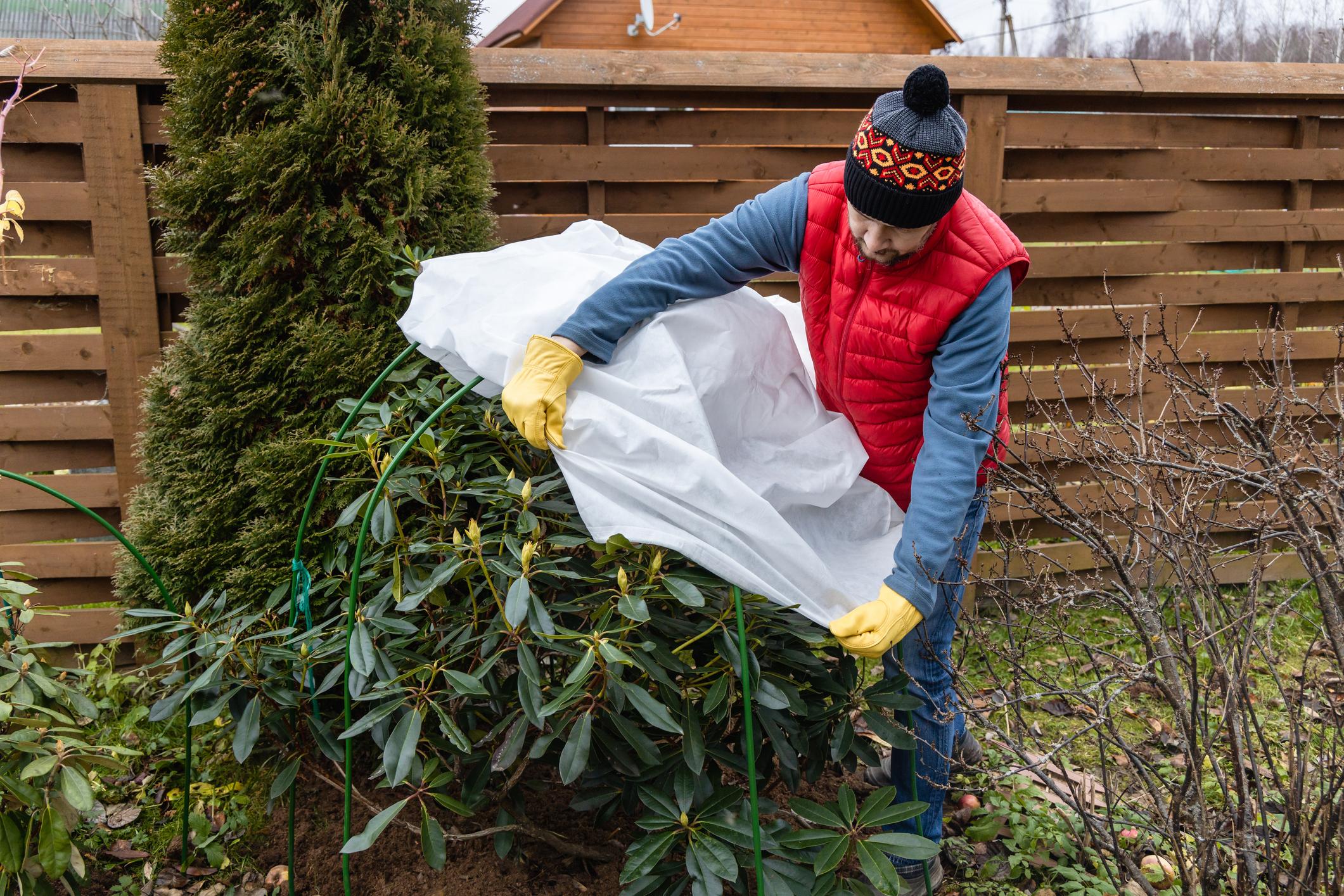 A person wearing yellow gloves covers a shrub with a white cloth near a fence.
Protect plants from harsh urban microclimates and wind shear
Building layouts can create cold microclimates and wind funnels that increase moisture loss and cause physical damage to plants.
Windburn and desiccation
Plant foliage is desiccated by high winds, which cause windburn (leaf browning) and, combined with frozen soil that prevents water uptake, can lead to severe dehydration.
- Apply anti-desiccant barrier sprays: Apply a professional horticultural anti-desiccant coating in late autumn to high-value specimen evergreens situated in wind tunnels. These biodegradable, polymer-based sprays form an invisible, flexible film over foliage that reduces moisture loss through transpiration by up to 40% without inhibiting natural respiration.
- Strategic planter repositioning: Take advantage of microclimatic variations across the building footprint:
- Move freestanding entrance planters away from exposed windward corners and the direct line of drafty revolving doors.
- Relocate mobile containers against south- or west-facing structural walls. The walls absorb solar radiation during daylight hours and slowly radiate heat overnight, thereby raising the ambient root-zone temperature by 1–3°C.
- Container-grown trees: Top-heavy specimen trees in tall architectural pots are prone to wind-toppling during winter gales. Ensure containers have a low centre of gravity by incorporating heavy ballast (such as washed pea gravel or granite chippings) beneath the root ball, or by installing discreet temporary guy-wire anchoring systems secured to ground anchor points.
Watering, pruning and potting-medium health
Proper seasonal watering, targeted pruning and mulching safeguard root systems and reduce safety risks throughout the winter months.
Watering management
Prevent pipe freezes while ensuring sheltered evergreens receive sufficient moisture during dry winter periods.
Irrigation line decommissioning
Decommission automated irrigation systems before the first freeze (mid-November):
- Isolation and blowout: Simply shutting off the main stopcock is insufficient. Residual water trapped in lateral pipes, solenoid valves and pressure regulators will expand, cracking valve manifolds and rupturing fittings. Lines should be purged with compressed air (2–3 bar) to clear all water from the system.
- Controller management: Switch off or pause irrigation controllers rather than disconnecting the power supply, as this can reset programmed schedules or deplete lithium backup batteries.
Manual hydration for sheltered displays
Water plants placed under cover to prevent the potting material drying out:
- The morning watering rule: Apply water only on mild mornings (above 4°C) when no overnight frost is forecast. This allows roots several hours to absorb moisture before the nighttime temperature drops.
- Testing frequency: Check moisture levels weekly using a manual core sampler or moisture probe. Potting compost for evergreen plants should remain slightly moist at root depth.
Mulch for root protection
Use high-grade, screened bark mulch to insulate roots, suppress weeds and maintain a professional appearance.
Specification and application standards
- Bark specification: Use FSC-certified, screened ornamental bark (typically 18–35mm grade). This provides a uniform, rich dark finish that complements modern hard landscaping, suppresses weeds and prevents soil splashback onto glass facades and light-coloured stone paving.
- Depth and coverage: Apply an even layer 50–75mm on all open shrub borders and in large architectural planters. Less than 50mm fails to provide adequate thermal insulation; over 75mm can suffocate roots by restricting oxygen exchange.
- The root flare buffer: Ensure mulch is pulled back at least 50mm from tree trunks and shrub root collars. Piling mulch directly against wood ("mulch volcanoes") traps constant moisture against the bark, creating an entry point for fungal collar rot (Phytophthora) and boring insects.
Pruning for safety
Inspect and prune trees and shrubs to mitigate risks posed by winter gales and accumulation of snow.
Identifying and mitigating structural weaknesses
Dormant winter pruning allows clear structural inspection of branch frameworks:
- The "Three Ds" removal: Systematically remove all dead, diseased and damaged branches before winter winds break them over vehicle parking bays, pedestrian walkways or delivery access routes.
- Crown thinning and sail reduction: For mature ornamental trees in urban wind funnels, structural crown thinning (typically a 10–15% reduction in leaf/branch area) reduces a tree's "wind-sail" resistance during severe gales without altering its natural shape.
- Clearing sightlines and lighting: Prune back low-hanging lateral growth obstructing external CCTV security cameras, high-level estate signage, pedestrian bollard lighting or emergency egress routes.
- Standard of work: All arboricultural interventions must strictly adhere to BS 3998:2010 (Tree Work – Recommendations). Flush cuts and ragged tears must be avoided; pruning cuts should be made cleanly just outside the branch bark ridge and collar to encourage natural compartmentalisation and prevent winter rot infections.
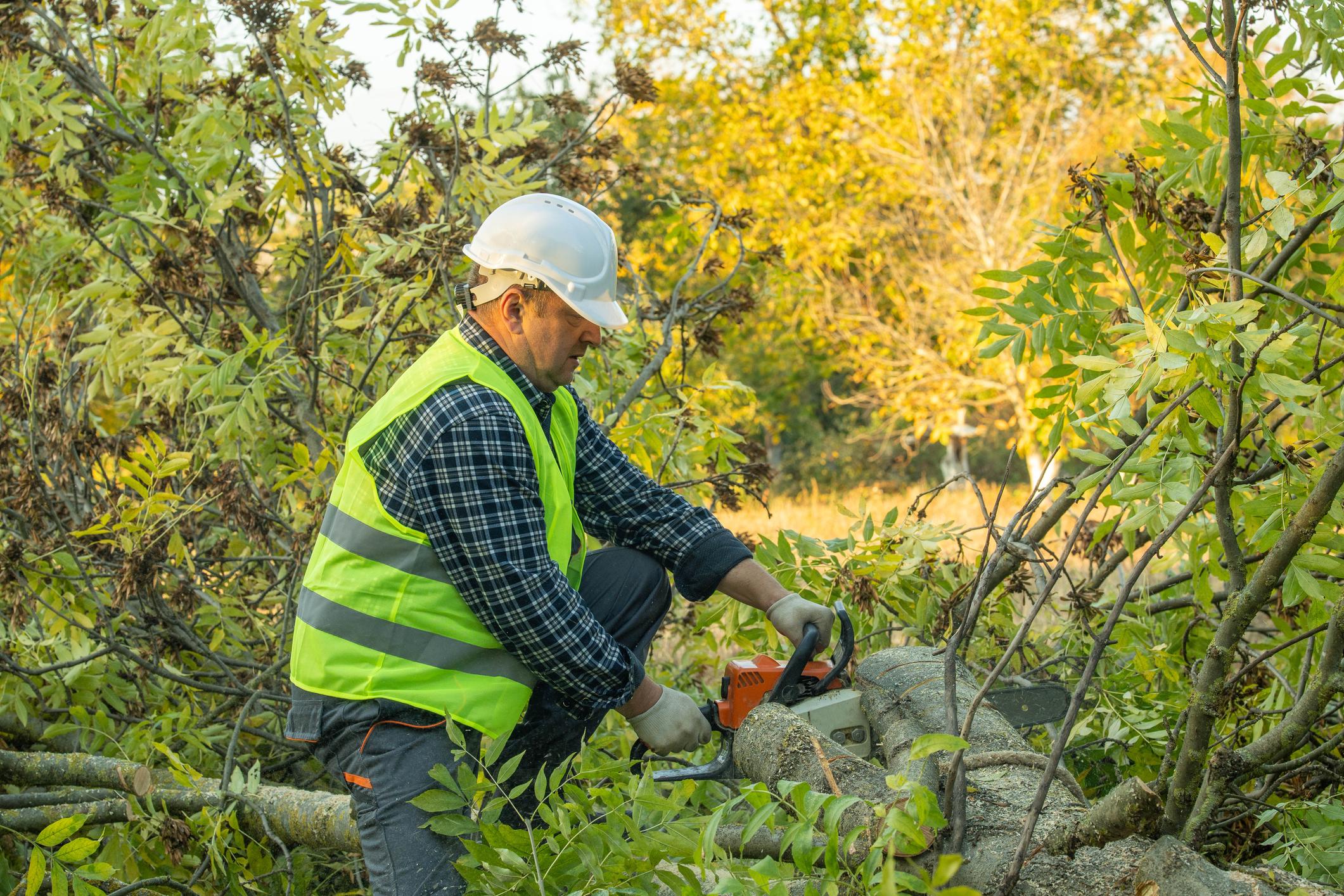 A worker wearing a hard hat and safety vest operates a chainsaw among trees.
Preventing slip, trip and fall hazards
Managing leaf mould, drainage runoff and site obstacles helps protect tenants and visitors from slip, trip and fall hazards and fallen-branch hazards on traffic routes and walkways.
Managing the biofilm and leaf mould slip hazard
Decaying leaves and standing water on hard surfaces form an organic film that significantly increases the risk of slips.
- The high-risk boundary: The boundary where soft planting beds meet hard pedestrian surfaces, such as tarmac, block paving or polished granite flags, is particularly hazardous. Soil splashback and saturated leaf debris drag across footpaths under foot and trolley traffic, creating low-friction hazard zones.
- Leaf clearing and sweeping: Decaying leaves must be systematically cleared weekly. Mechanical sweepers, high-velocity leaf blowers and manual raking should be deployed along all pathways, fire exit routes and disabled access ramps.
- Surface treatments for algae: In areas shaded from winter sunlight, treat hard surfaces with a non-acidic, biocide wash to neutralise algae and lichen spores before damp frosts make them treacherous.
Runoff and drainage: Preventing "black ice traps"
Prevent water from saturated plant beds or containers from draining onto adjacent walkways and freezing into black ice.
- Soil grade and retention: Ensure soil and mulch levels within border beds sit at least 50mm below the bordering kerb or edging lip. In heavy rain, saturated compost will not wash over pedestrian walkways where it can freeze overnight into black ice.
- Planter drainage diverters: Containerised displays at main entrances must not discharge drainage water across pedestrian thresholds. Direct container drainage towards gully traps, gravel French drains, or permeable ground surfaces.
- Gully and interceptor checks: Blocked gullies and slot drains surrounded by landscape mulch can cause surface water to back up onto car parks and loading bays. Clear all surrounding leaf litter, silt and tree seeds weekly to maintain free drainage during winter storms.
Weekly checklist for assessment of winter risks
Conduct weekly and post-storm site inspections to carry out risk assessments and maintain audit trails using this checklist.
- Access-route clearance: Verify that all primary pedestrian walkways, fire exit routes and disabled-access ramps are clear of leaf mulch, moss and encroaching vegetation.
- Tree-branch stability: Inspect tree crowns for broken branches hanging over footpaths and parking areas.
- Container anchoring and alignment: Inspect freestanding entrance planters to ensure they have not moved in high winds or settled unevenly, and do not obstruct accessible routes or emergency doors.
- Lighting and CCTV visibility: Check if branches have moved into the sightlines of security cameras, pathway luminaires or exterior security sensors.
- Salt barriers: Check that salt barriers and deflectors near roadways remain anchored and free from structural breach.
- Audit documentation: Log all inspection dates, hazards, corrective actions and subcontractor sign-offs in your site health and safety management records.
A checklist for pre- to post-winter plant care
Use this step-by-step checklist to coordinate grounds maintenance tasks across pre-frost, mid-winter and spring recovery phases.
Phase 1: October – November (pre-frost infrastructure and bed prep)
- Decommission irrigation: Isolate mains feeds, drain backflow preventers, and purge lateral lines with compressed air (2–3 bar). Set controllers to standby.
- Structural pruning: Inspect trees and shrubs; prune dead, diseased or crossing branches (BS 3998:2010) to reduce wind resistance and hazard risks.
- Bark mulch application: Lay a uniform 50–75mm layer of graded ornamental bark mulch on exposed borders, leaving a 50mm clearance around stems.
- Planter elevation: Clear pot drainage holes of silt and place containers on 15mm heavy-duty pot risers to prevent them from freezing to the paving.
- Leaf and gully clearance: Strip fallen leaves from walkways and drainage channels weekly to prevent slippery biofilms and blocked storm gullies.
- Install salt barriers: Erect physical barriers or 300mm skirting along soft borders adjacent to roads and priority gritting paths.
Phase 2: December – January. (Hard freeze protocols and monitoring)
-
Reposition mobile displays: Move high-value, frost-tender mobile containers away from wind-tunnel corridors into sheltered building alcoves.
- Temporary fleecing: Apply 30–50 gsm horticultural fleece hoods to sensitive specimen displays during severe cold weather alerts.
- Monitor gritting buffers: Audit maintenance staff or contractors to verify adherence to the mandatory 1-metre salt buffer zone from soft landscapes.
- Targeted hydration: Provide light morning irrigation (above 4°C) to sheltered container displays during extended dry, frost-free spells.
- Post-storm inspections: Conduct immediate site walk-throughs post-gale to identify hanging branches, cracked planters or displaced soil runoff.
- Snow load management: Gently brush heavy, wet snow off evergreen hedging and architectural shrubs before branches bend or crack.
Phase 3: February – March. (Post-winter audit and spring recovery)
Leach Salt Saturation: Flush roadside borders and planters suspected of salt contamination with copious fresh water on mild mornings.
Recommission Water Supply: Gradually repressurise exterior taps and irrigation networks once the hard frost risk has passed; inspect for burst seals.
Remedial Pruning: Wait until new buds swell before pruning frost-burned tips on evergreen displays cleanly back to healthy wood.
Substrate Aeration: Lightly cultivate the top 50mm of soil in planters to relieve winter compaction, and top up decorative bark mulch.
Contractor Sign-Off: Reconcile SLA tasks, log structural incidents in the facilities portal, and schedule early-spring formative feeding.
Protect your estate with exterior maintenance
Winter conditions present significant operational, financial and safety risks to commercial properties. By implementing proactive frost protection, salt management, structural pruning and comprehensive risk assessments, facilities managers can safeguard plant health, maintain site aesthetics and reduce legal liability throughout the winter season.
Partnering with experienced grounds maintenance professionals ensures that your property remains safe, compliant and visually striking year-round
FAQs
Container plants experience 360-degree cold air circulation around their base and sidewalls, freezing root systems from the outside. Fine feeder roots along container walls can die at temperatures as mild as -5°C, and frozen root balls prevent moisture uptake, leading to severe winter desiccation.
Facilities teams should establish a mandatory one-metre "no salt" buffer zone, deploy physical salt deflectors or screens along beds near roads and parking areas, flush contaminated soil with clean water on frost-free days, and consider switching to non-toxic de-icers like calcium magnesium acetate (CMA) near ornamental plantings.
Automated irrigation networks should be decommissioned in mid-November before the first freeze. In addition to shutting off main valves, lateral lines, solenoid valves and backflow preventers must be purged using compressed air (2–3 bar) to remove trapped water and prevent pipe or fitting ruptures.
Regularly sweep leaf debris and leaf mould from walkways and fire exits to prevent slippery biofilms, treat shaded hard surfaces with non-acidic biocides, maintain soil and mulch levels at least 50mm below kerb lines to avoid runoff, and keep storm gullies clear to prevent water accumulation and black ice formation.
Dormant pruning allows clear visibility of structural frameworks to identify and remove dead, diseased or damaged branches before winter gales can break them. Crown thinning reduces wind resistance on mature trees, and pruning low branches keeps site lighting, CCTV cameras and estate signage unobstructed.