From Concrete to Coastal: Reimagining a Courtyard
-
Unnamed
-
Grimsby, North East
-
July 2025
Outdoor areas in corporate environments are frequently undervalued, often treated as mere transitional zones rather than functional assets. However, a well conceived landscape does far more than provide visual relief. It fundamentally shifts the workplace dynamic, offering a sanctuary for mental clarity and a secondary setting for professional engagement. This project, delivered by the Urban Planters landscape team and designer Charlotte Connelly, illustrates how even the most exposed, inhospitable sites can be reclaimed through strategic design and horticultural expertise.
The Value of Professional Landscape Design
Landscape Design is not merely an aesthetic layer applied to a completed build; it is a discipline rooted in problem-solving and environmental psychology. In a corporate context, these spaces offer biophilic benefits that are proven to reduce stress and boost cognitive performance. By integrating nature into the daily office routine, we are not just decorating a courtyard; we are extending the usable footprint of the building and investing in the long-term wellbeing of its inhabitants.
The brief for this project was to create an inviting outdoor space for employees, to hold meetings outside and provide shelter from the north sea winds. All whilst enhancing biodiversity and supporting wildlife in the area.
Simple! Or was it?
The Challenge: Mitigating the North Sea Climate
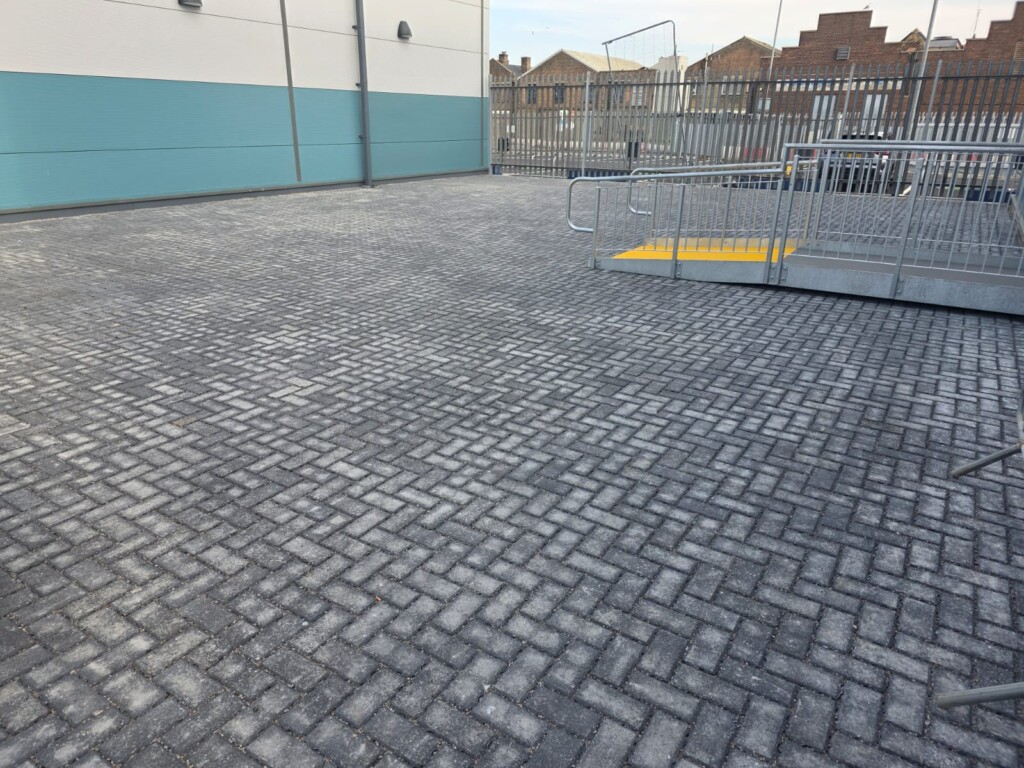
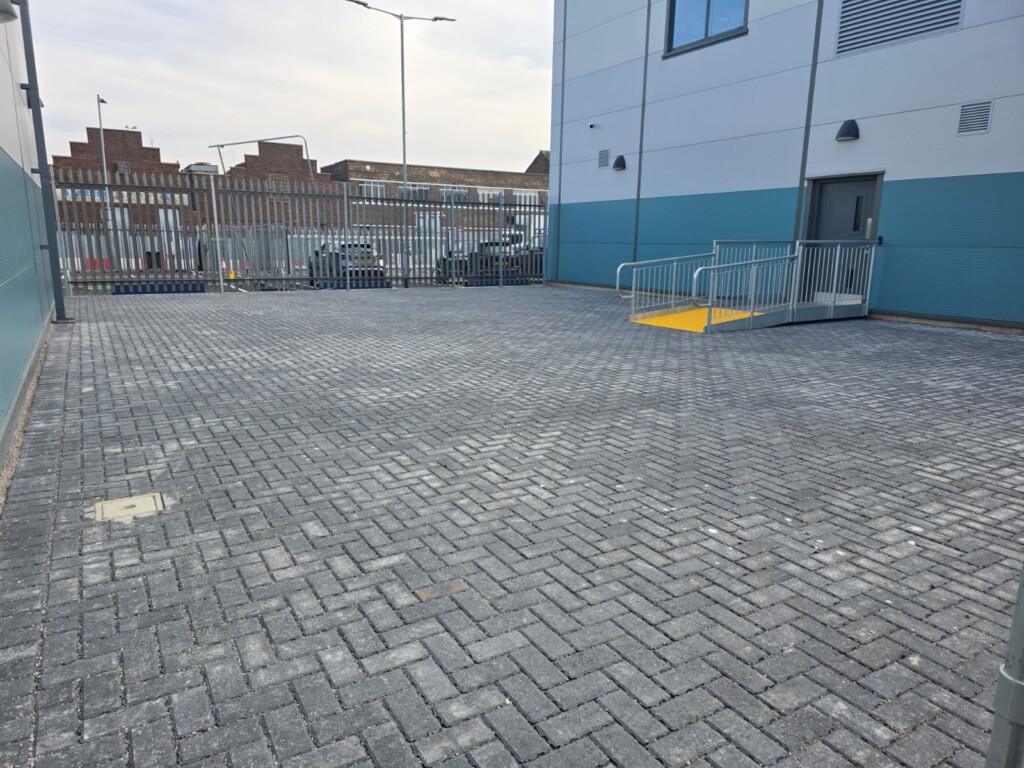
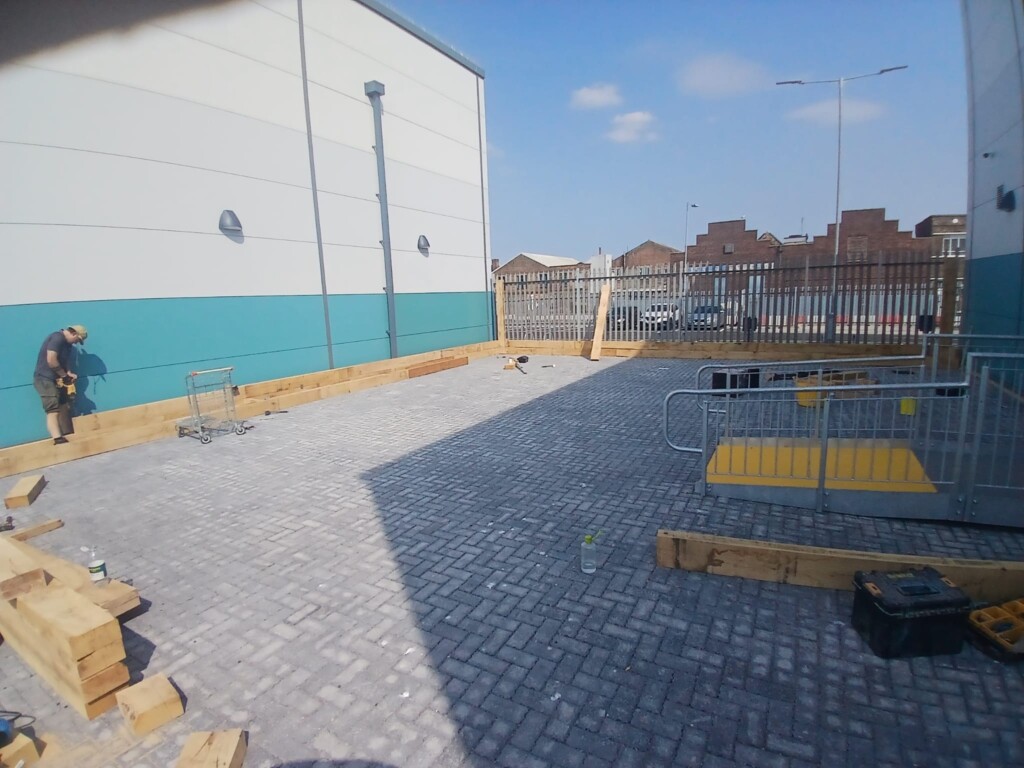
The primary obstacle was the site’s extreme exposure. Positioned near the coast, the courtyard was subjected to persistent, salt-laden winds from the North Sea. It was a sterile, overlooked space that lacked both privacy and comfort.
Structural Integrity and Design Language
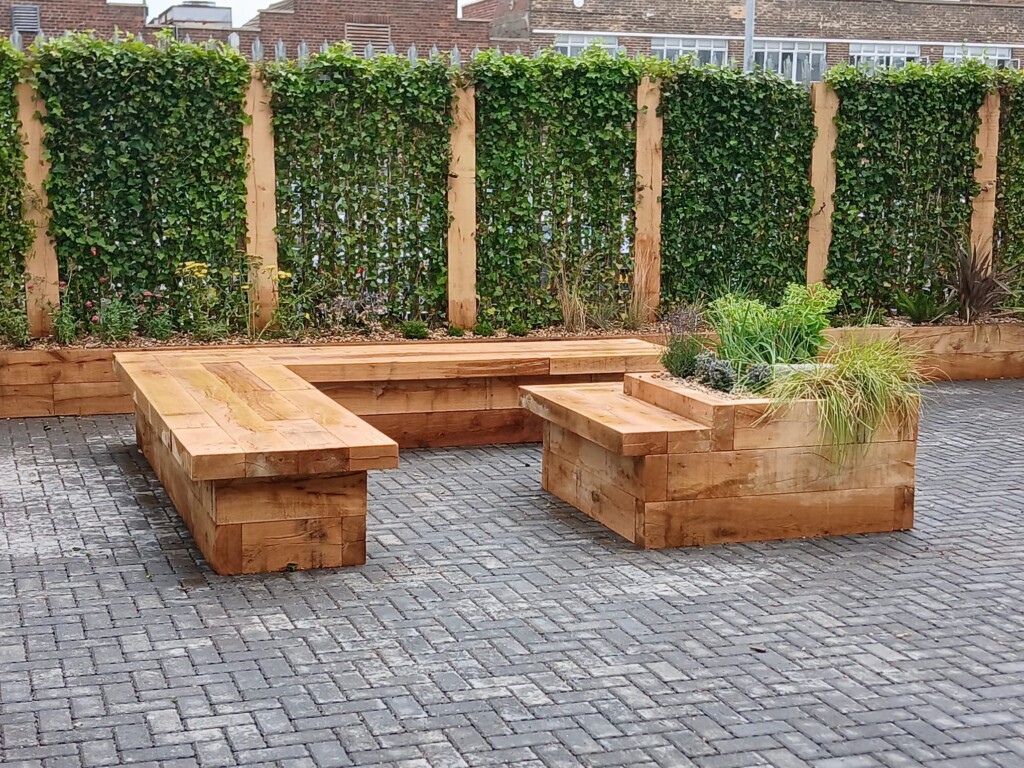
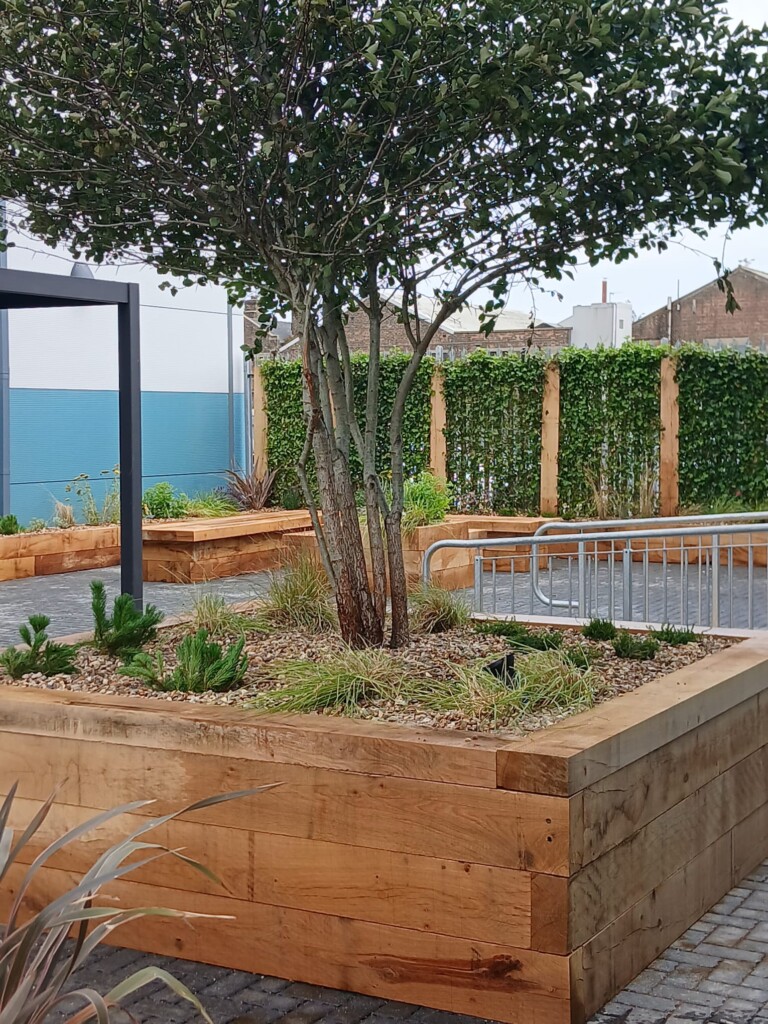
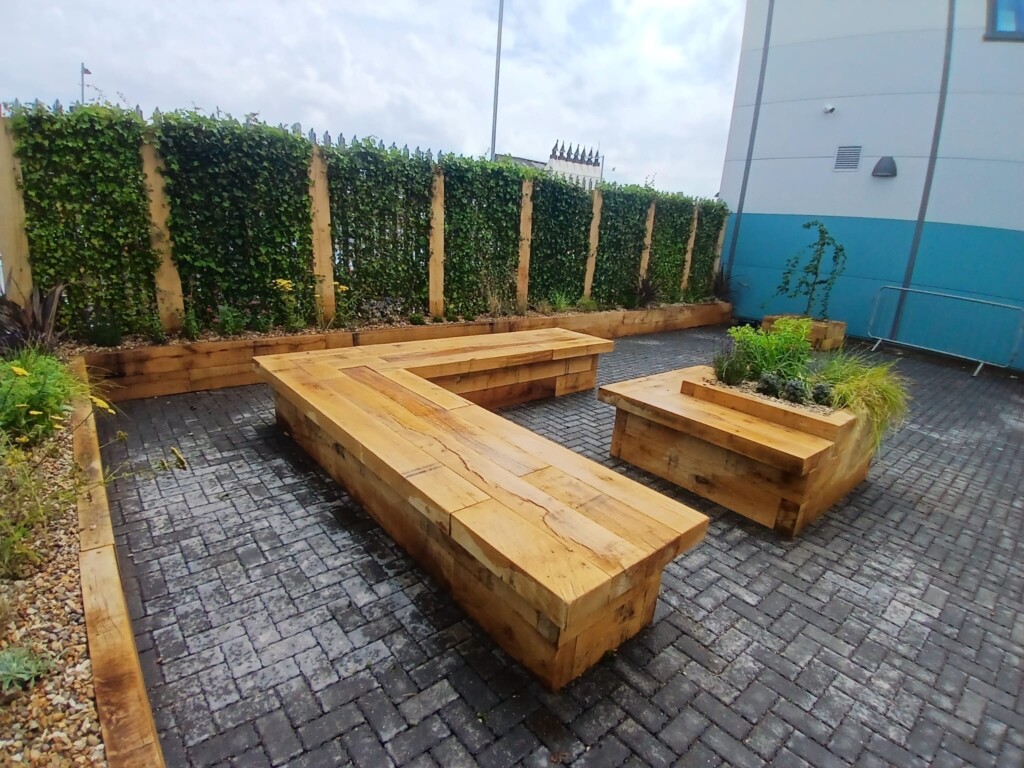
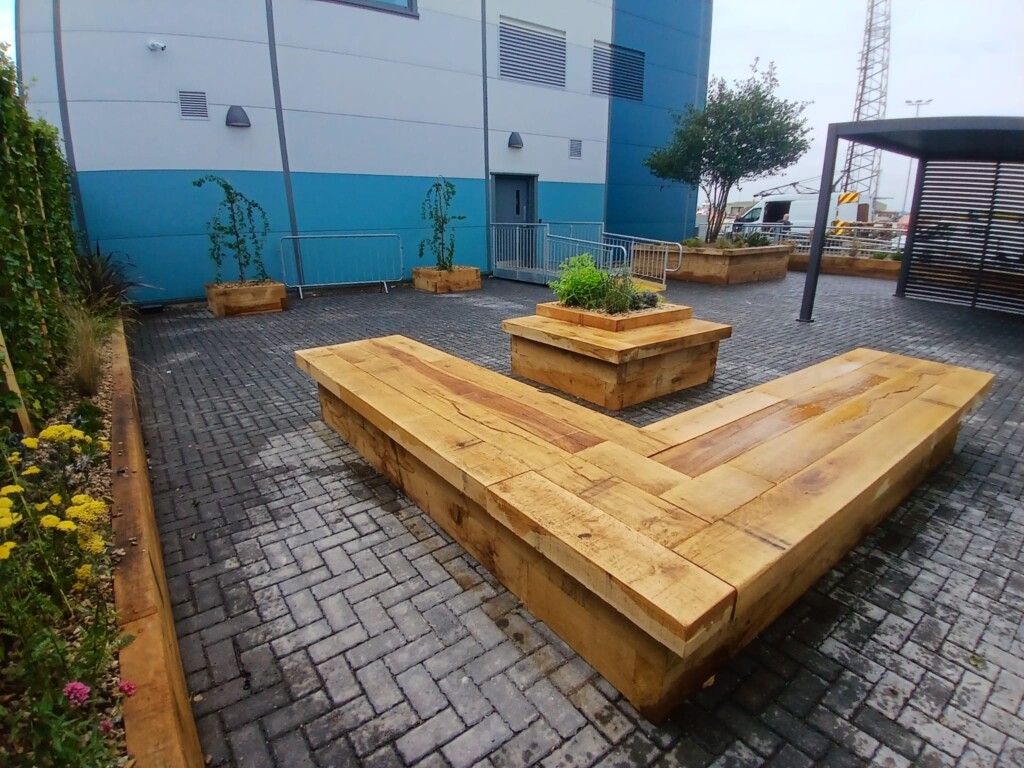
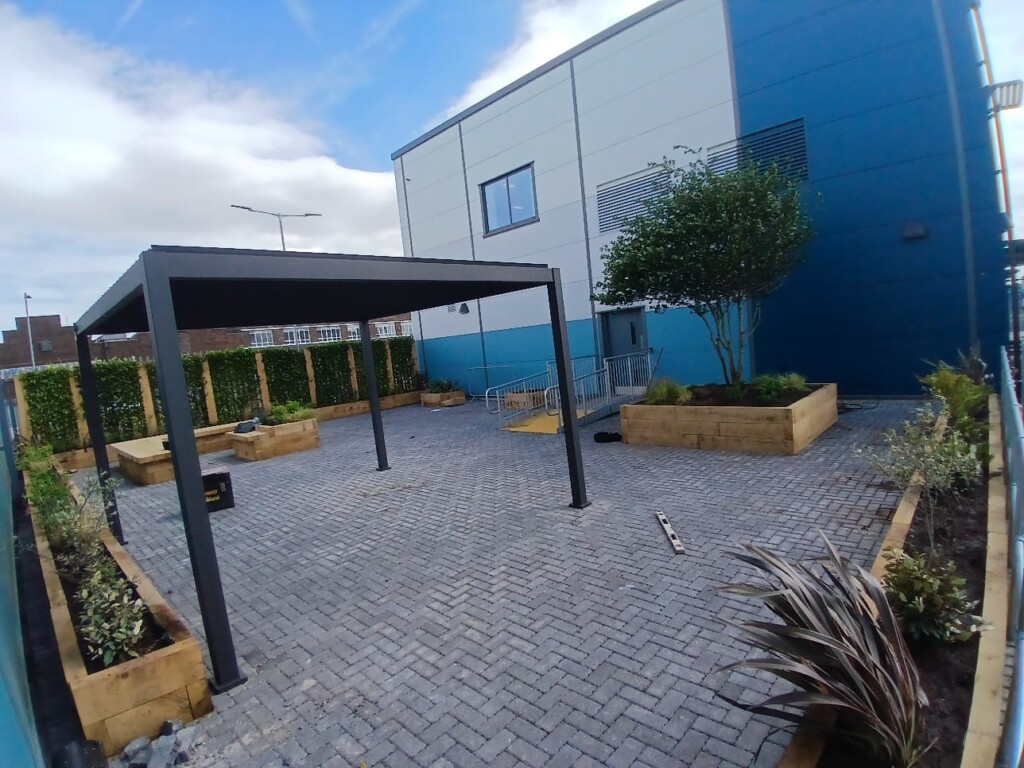
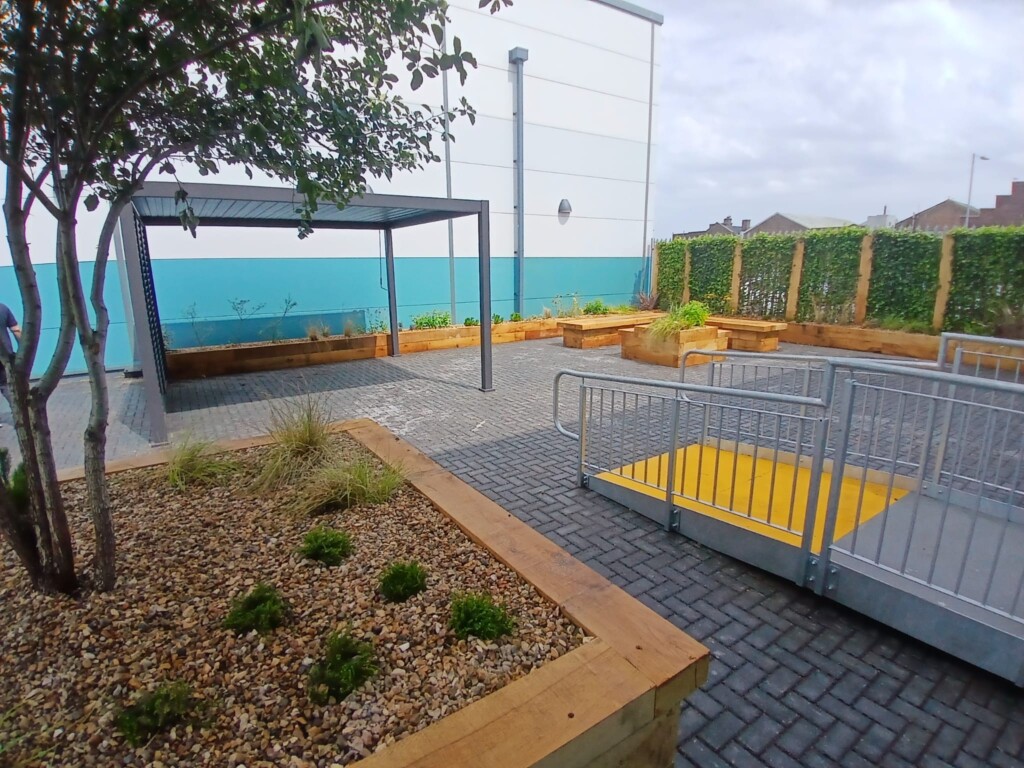
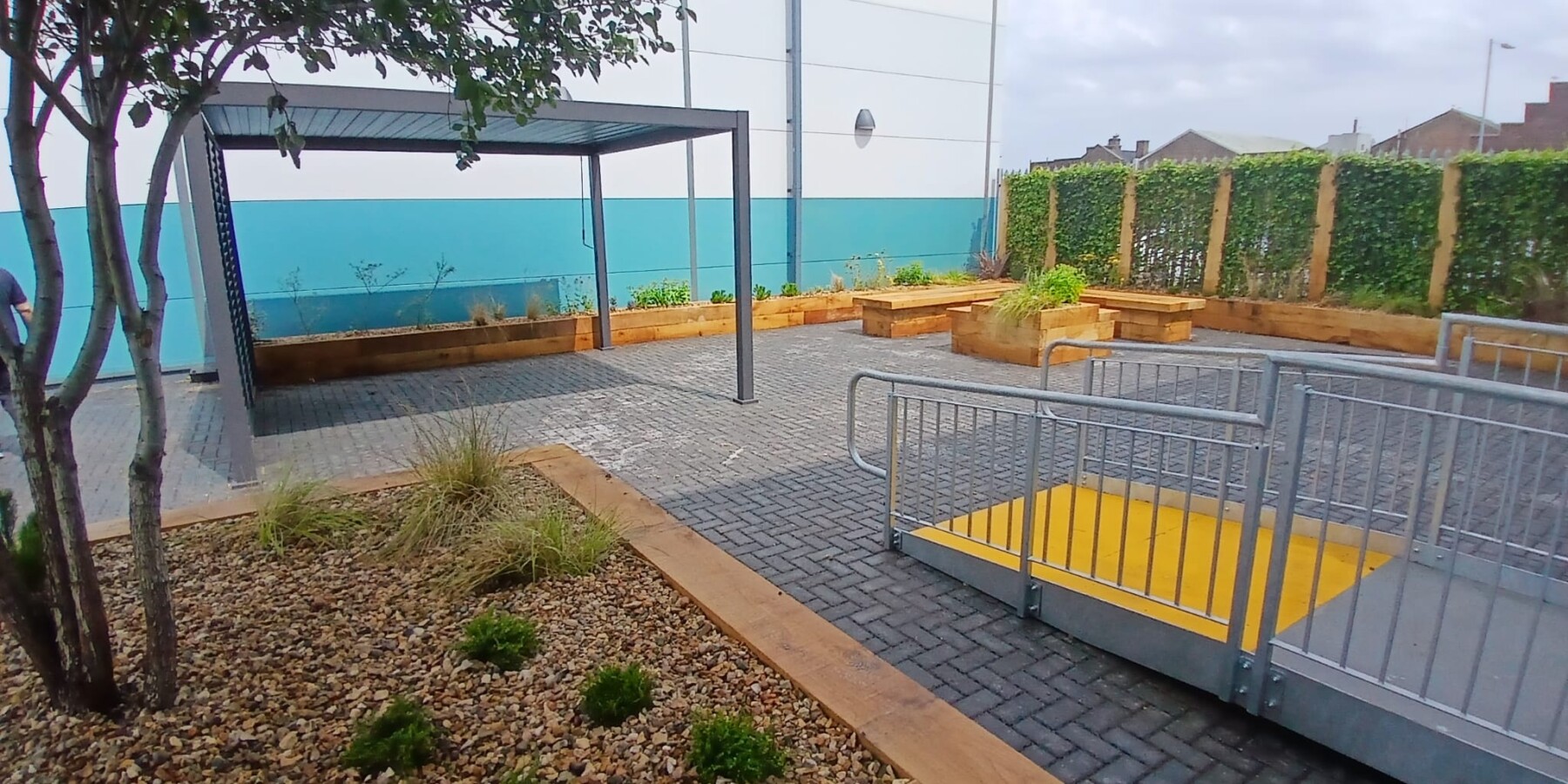
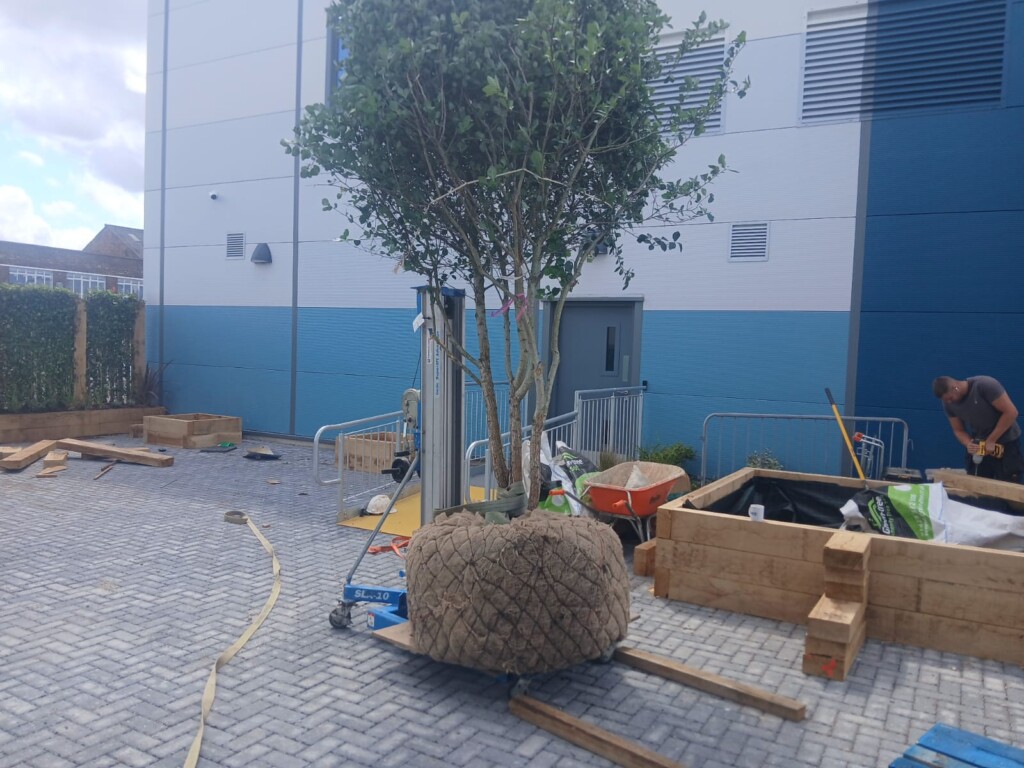
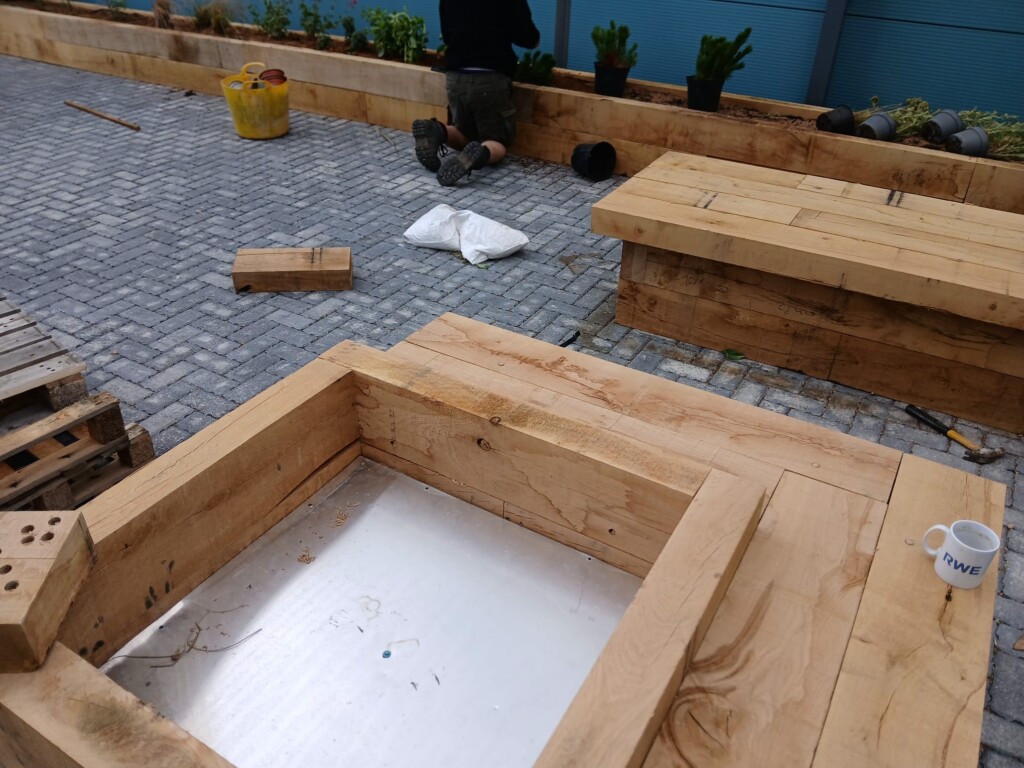
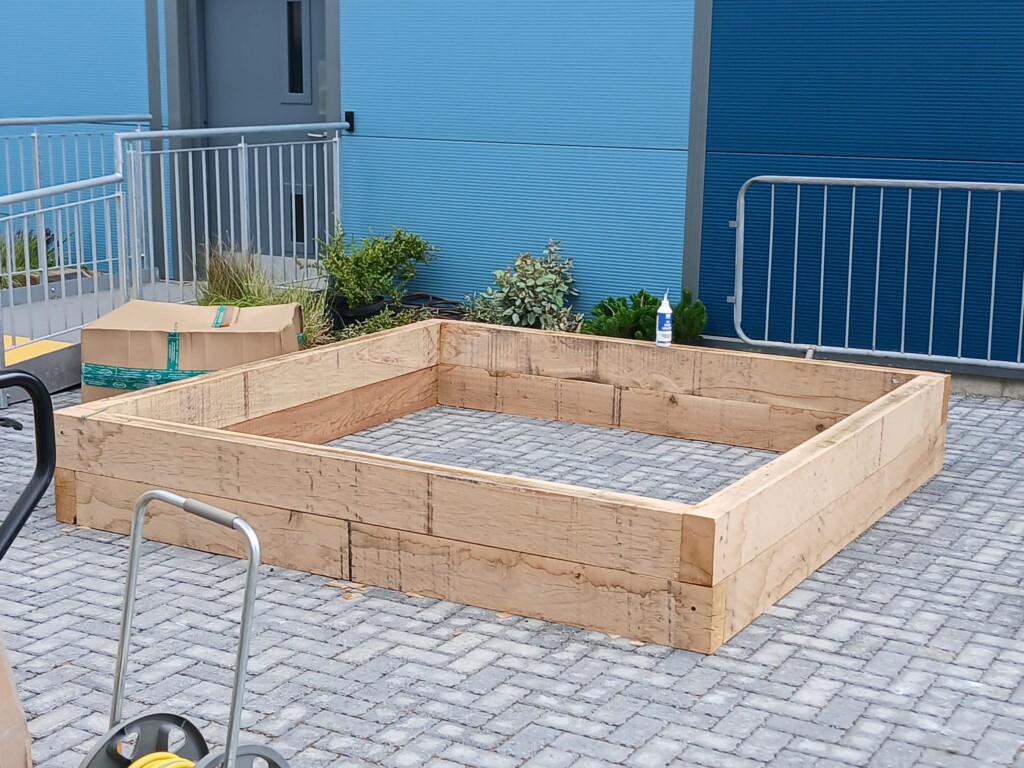
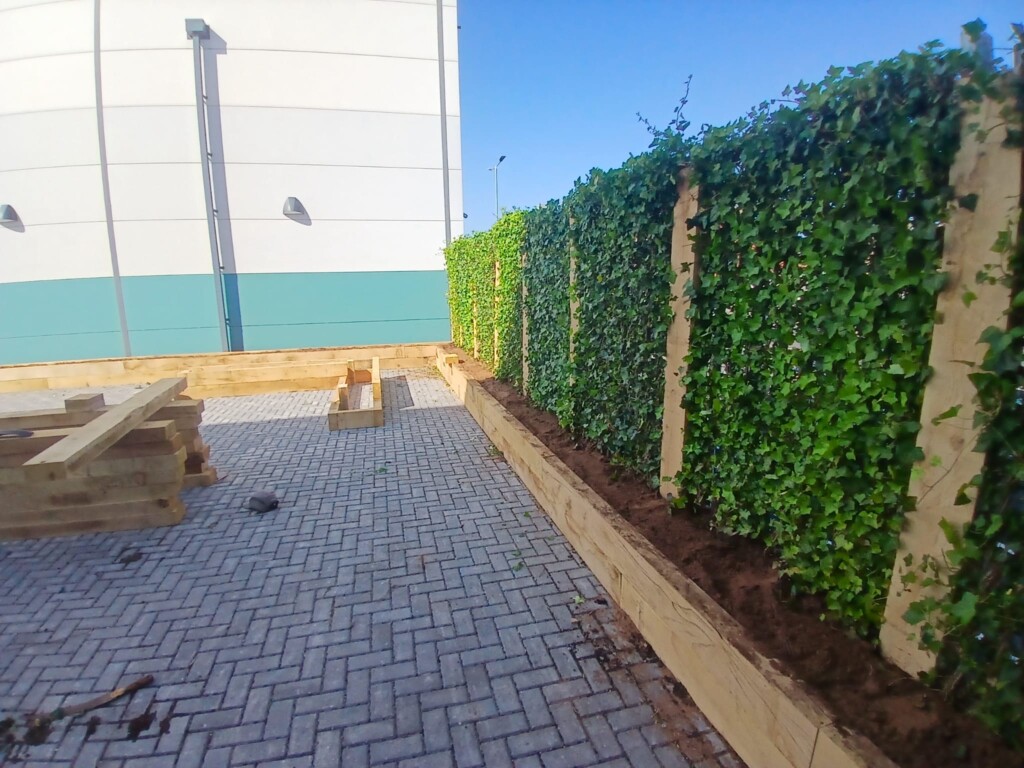
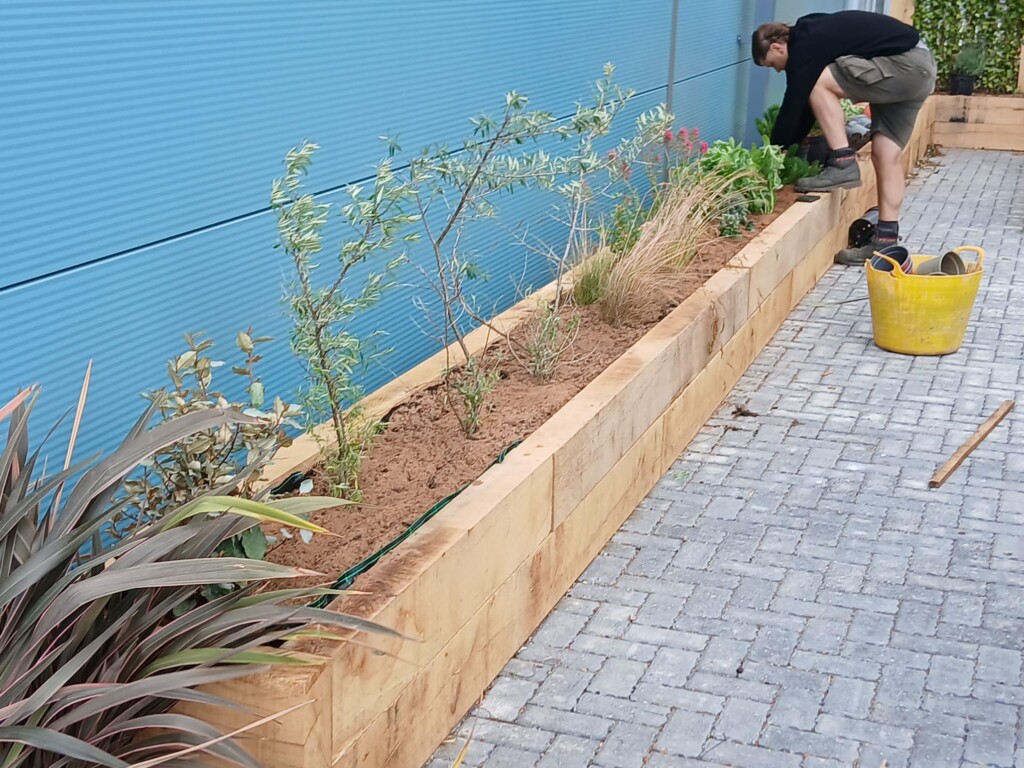
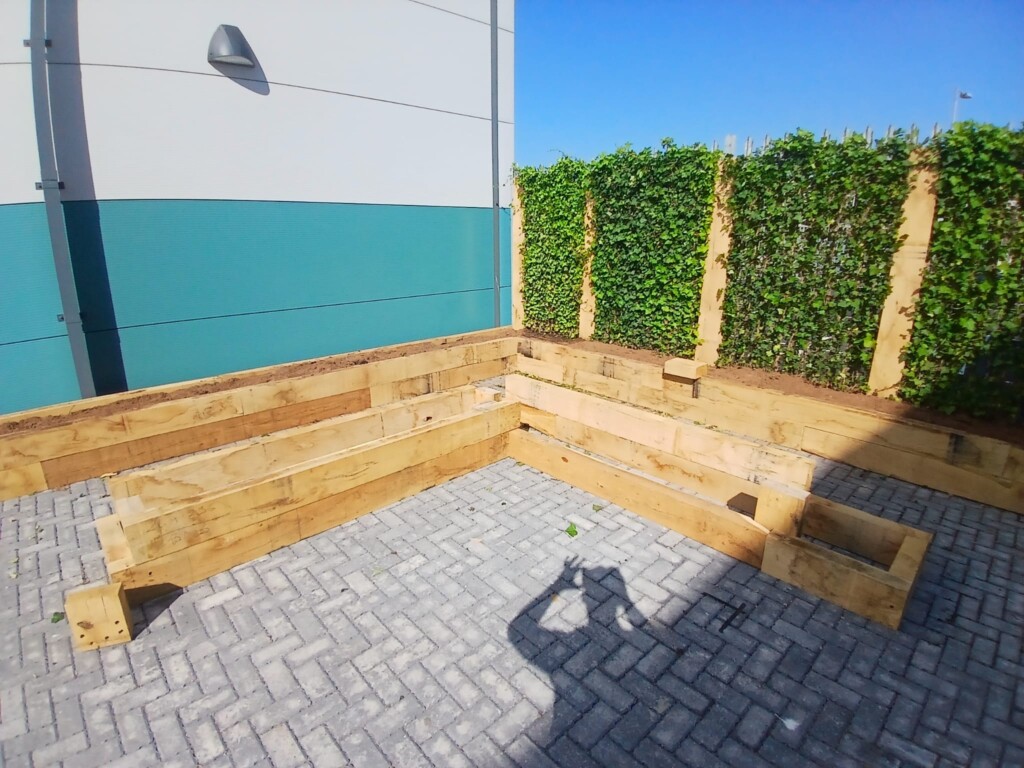
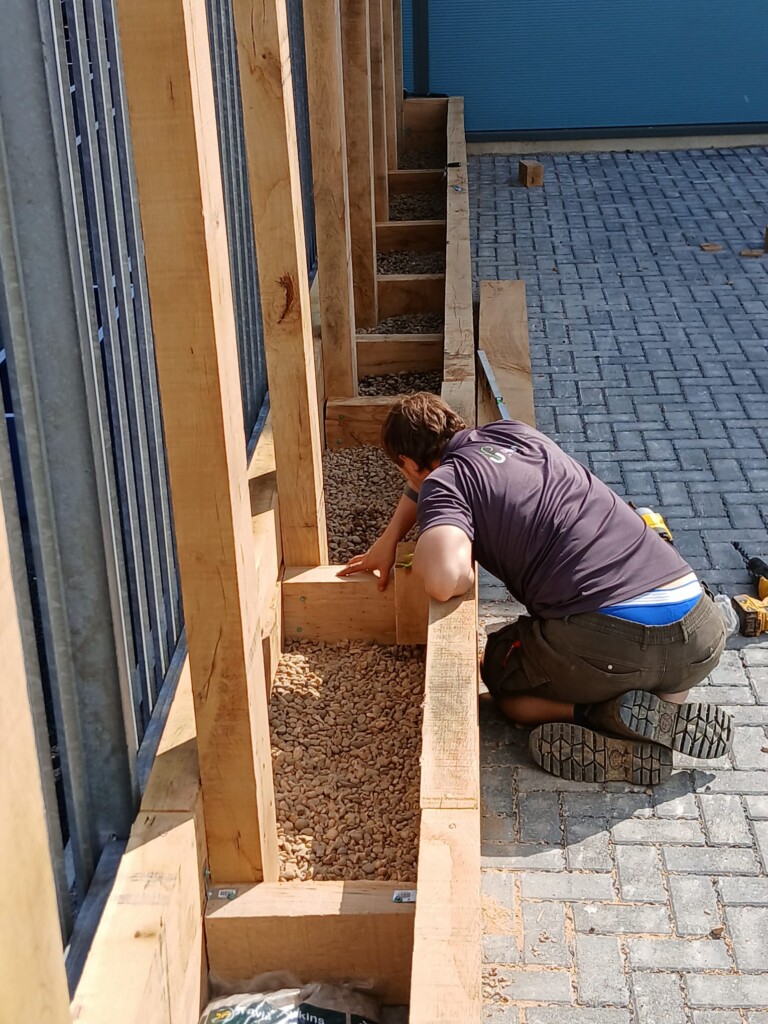
To introduce warmth and organic texture, we utilised sustainably sourced oak sleepers for the raised planters. Oak is a robust material that develops a refined silvery-grey patina over time, perfectly suited to a coastal palette. Along the boundary, upright sleepers were installed to support ivy screens. These serve a dual purpose: they act as a visual buffer from the adjacent car park and mimic the form of traditional beach groynes, providing a rhythmic, structural windbreak.
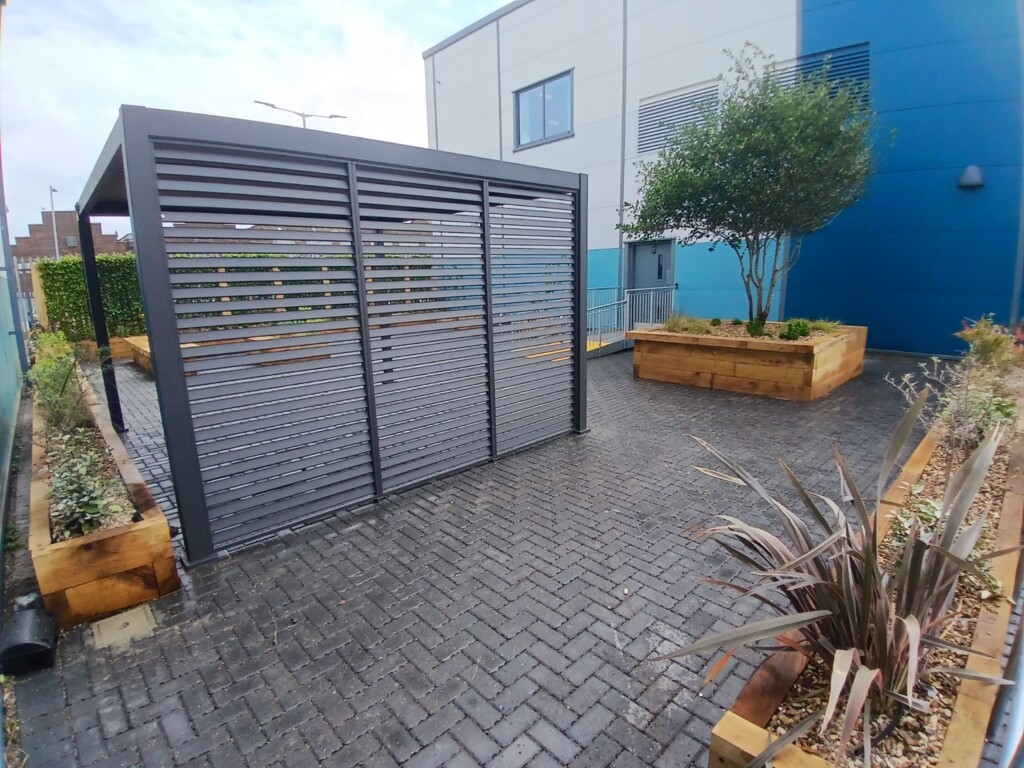
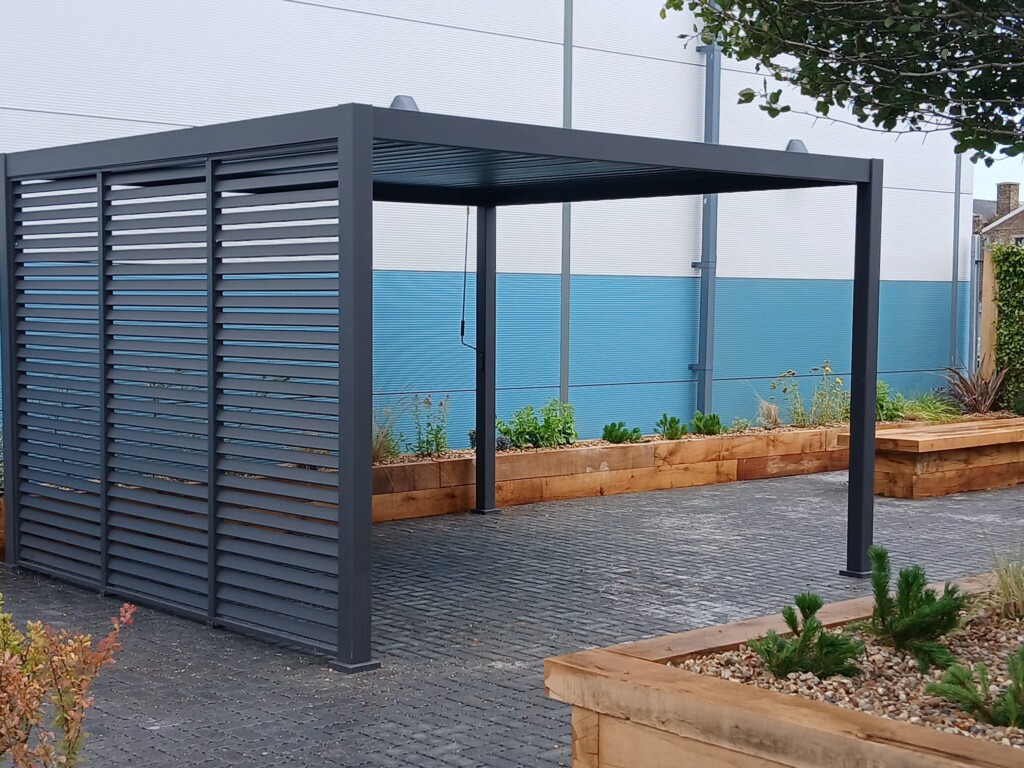
The centrepiece of the social space is a 4m x 3.6m aluminium pergola. Equipped with a louvred roof and slatted sides, it allows users to modulate light levels while remaining protected from the wind. Integrating such a structure into existing paving in a high-wind zone was a significant technical hurdle. Success relied on a close collaboration between the design and installation teams to ensure the footings were secure enough to withstand coastal gusts.
Horticultural Resilience and Biodiversity
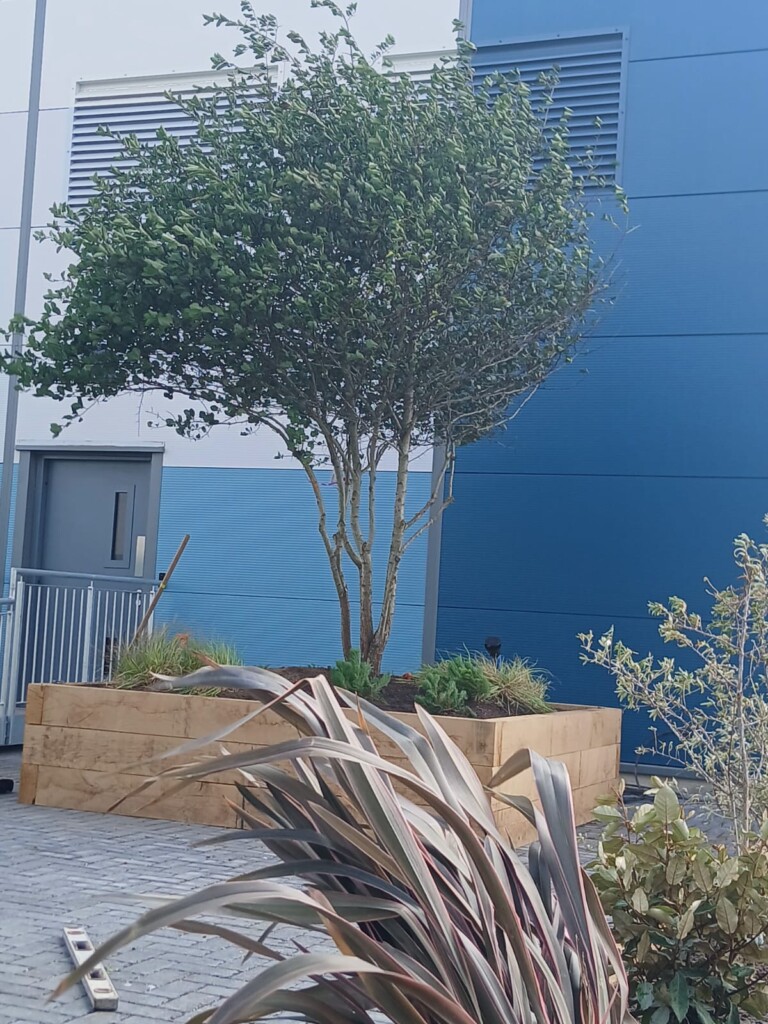
Plant selection was governed by the need for halophytic resilience, species that can thrive despite salt spray and mechanical wind damage. To establish vertical interest and ecological value, a multi-stem Crataegus prunifolia was hand-picked for its architectural form. This was integrated into a bespoke planter that also functions as an informal bench.
The broader planting scheme ensures year-round durability:
- Structural Anchors: Species such as Hippophae rhamnoides (Sea Buckthorn) and Pinus mugo Mops provide a sturdy front line against the elements.
- Coastal Textures: Crambe maritima (Sea Kale) and Eryngium maritimum (Sea Holly) reinforce the maritime aesthetic.
- Biodiversity Boost: Lavandula and Achillea Moonshine were included to attract pollinators, turning a previously barren zone into a living ecosystem.
Conclusion
Despite a demanding deadline tied to a formal grand opening, the project demonstrates the power of site-specific design. By combining bespoke timber craftsmanship with a highly specialised plant palette, we converted a hostile environment into a sheltered corporate retreat. It stands as a testament to how thoughtful landscape design can turn the most challenging outdoor spaces into thriving, functional environments.
Images
Before:
During:
After: